
How to Compare Outdoor Gear Without Getting Trapped by “Best” Lists
The best tent, backpack, headlamp, or sleeping pad does not exist in isolation. There is only the best match for a particular person and trip. A useful comparison starts by defining that job, removes products that fail a non-negotiable requirement, and scores the remaining tradeoffs with the same evidence.
Start With the Trip, Not the Products
Before opening comparison tabs, write a one-sentence use case. Include activity, season, expected conditions, trip length, group size, and the constraint most likely to decide the purchase. “Two-person tent for three-season backpacking, mostly humid forests, carried by one person, with interior room valued above minimum weight” is useful. “Best backpacking tent” is not.
Then list three kinds of criteria:
- Must-haves: a product is eliminated if it misses one. Examples include fit range, capacity, group size, or compatibility with equipment you own.
- Tradeoffs: more is not always better. Lower weight may mean less space; greater durability may mean more weight; extra features may add price and complexity.
- Tie-breakers: color, small conveniences, or a modest price difference should decide only after the meaningful criteria are satisfied.
Use One Comparison Matrix
Put every serious candidate in the same table. Do not compare one brand's marketing page with another product's long-term review and assume the strongest adjective wins. Record the same fields from the same type of source wherever possible.
| Criterion | Question to answer | Typical priority |
|---|---|---|
| Trip fit | Does it work for the route, season, group size, and skill level? | Essential |
| Fit and comfort | Does it fit your body or sleeping style after a real trial? | Essential when applicable |
| Measured weight | Which published weight is being compared, and what is included? | High for carried gear |
| Performance | Which specs map to the conditions you actually expect? | High |
| Durability and repair | What failure modes matter, and can the item be serviced? | Trip dependent |
| Total cost | What accessories are required, and what is the return policy? | Budget dependent |
Normalize the Numbers Before You Score Anything
Product specifications can look comparable while describing different things. Check whether tent weight includes stakes and bags, whether a sleeping pad dimension refers to its widest point, whether battery runtime uses the same output mode, and whether prices include required accessories. Convert units, record what is included, and mark missing values as unknown instead of filling them with a guess.
A score is useful only after normalization. Give each remaining criterion a simple importance weight from one to five, then rate each product against the written use case. Multiply importance by rating and total the columns. The arithmetic is not objective truth; it makes your priorities visible and exposes when one exciting feature is overpowering several practical weaknesses.
A quick worked decision
If interior space has importance 5 and Product A scores 4, that criterion contributes 20 points. If minimum weight has importance 3 and Product A scores 5, it contributes 15. Product B may be lighter, but it should not win the overall decision when space is the stated priority. The matrix prevents the lightest number from silently replacing the trip brief.
Separate Specifications, Tests, and Personal Fit
Specifications
Use manufacturer documentation for dimensions, materials, compatibility, included parts, and warranty terms.
Independent tests
Use credible reviews for measured performance, usability, failure points, and longer-term context.
Personal trial
Use a fitting or real setup for packs, footwear, sleep systems, and anything whose success depends on your body.
Community comments are useful for discovering recurring questions and failure modes, but they often omit the person's conditions and priorities. Treat them as leads to investigate, not votes to count. Likewise, a “best” list can introduce candidates, but its winner does not replace your criteria.
Compare in MetaGear, Then Test in a Pack List
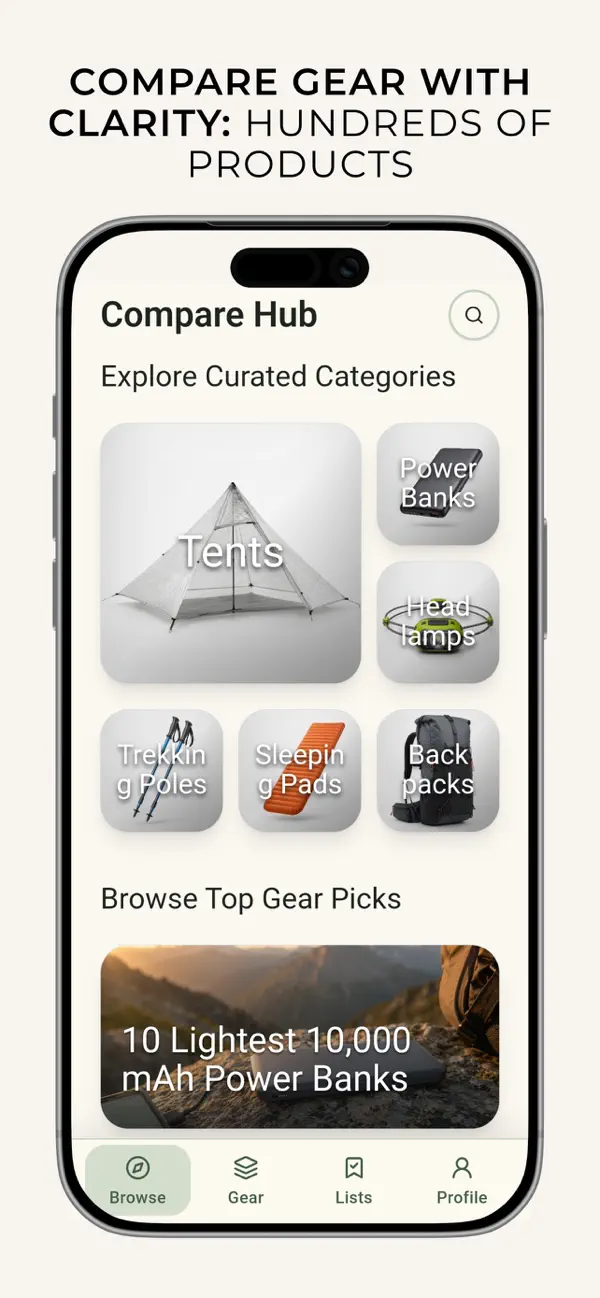
MetaGear's Compare Hub is designed for the shortlist stage: browse outdoor gear categories, sort by relevant specifications, and compare products side by side. Once a candidate is saved, put it into a copy of your actual pack list. That reveals its effect on total weight, category balance, and cost in the context that matters.
If a purchase is mainly about reducing pack weight, pair the matrix with the backpacking gear budget method so you can compare the cost of each meaningful improvement. If the shortlist shows you already own a suitable item, record it in an outdoor gear inventory and stop shopping.