
Winter Hiking Gear Checklist: Start With the Route, Then Add the Cold-Weather System
A winter list is not a summer day-hike list with a warmer jacket added. Snow, ice, wind, limited daylight, slower movement, and cold-sensitive equipment change the whole system. Start with the route and current conditions, cover the Ten Essentials, then add only the winter equipment and margin that the actual trip requires.
The Direct Answer: Build a Winter Modifier List
Keep a tested day-hike baseline, then create a separate winter variant for each meaningful condition set. Modify navigation, movement, clothing, water, food, and emergency systems together. A change such as deeper snow affects pace and daylight exposure as well as footwear; treating it as one isolated gear choice misses the bigger consequence.
The National Park Service's reviewed winter hiking guidance emphasizes preparation, navigation that does not depend on cell service, layers, sun protection, food, water, and traction for snow and ice. Use local land-manager alerts and the current forecast alongside that baseline.
Complete the Route Card Before the Gear List
Write one short route card that answers the questions below. If the answers are unknown, the list is not ready. Share the route and return plan with a person who is not on the trip.
- What are the forecast temperature, wind, precipitation, and daylight window?
- Will the route be packed snow, ice, deep snow, exposed ground, or a changing mix?
- Does the route enter avalanche terrain, cross frozen water, or require technical travel?
- How far is the nearest reliable turnaround, shelter, road, or staffed facility?
- What pace is realistic for the least-experienced member in winter conditions?
- Which route, weather, or equipment change means the trip should turn around?
Know when a generic checklist stops being enough
Avalanche terrain, frozen-water travel, climbing, glacier travel, and other technical objectives require specific knowledge, conditions information, and equipment. A general winter hiking list cannot supply that training or decide whether a route is safe. Use qualified local instruction and the applicable official forecast or operator requirements.
Winter Hiking Gear Checklist by System
| System | Day-hike baseline | Winter modifier |
|---|---|---|
| Navigation and communication | Route map, navigation tool you know how to use, charged phone, and a shared trip plan | Account for covered trails, shorter daylight, cold-affected batteries, and unreliable service. |
| Movement | Footwear and poles suited to the route | Choose traction or flotation for observed and forecast surface conditions; verify fit before leaving. |
| Clothing | Hiking layers and weather protection | Carry dry insulation and protection for wind, precipitation, hands, head, eyes, and exposed skin. |
| Water and food | Trip quantity plus a reasonable margin | Plan for freezing containers or treatment equipment and slower travel; keep critical items usable. |
| Emergency | Light, first aid, repair, fire, signaling, and emergency shelter | Size the system for the route, remoteness, party, weather, and consequences of an unplanned stop. |
Begin with the complete route-based day-hike packing list so the winter modifiers do not replace basic navigation, first aid, repair, light, and emergency planning.
Pack Clothing as an Adjustable System
Separate the clothing worn while moving from the dry insulation and weather protection carried for stops or changing conditions. The goal is not to name one universal fabric or jacket. It is to make sure the layers work together, fit under the shell, protect exposed areas, and can be changed before sweat or weather becomes a larger problem.
- □ Next-to-skin and active layers tested together
- □ Dry insulation reserved for stops or emergencies
- □ Wind and precipitation protection for the forecast
- □ Hat, gloves or mittens, and spares where justified
- □ Eye and skin protection for reflected sun and exposure
- □ Footwear, socks, gaiters, traction, and flotation checked as one system
Test the full combination close to an easy exit before relying on it farther from help. Confirm that traction fits the exact footwear and that required tools are accessible without unpacking the whole bag.
Make Water, Food, and Power Work in the Cold
Carry the trip-specific amount of food and water with a margin based on the route and conditions. Then examine how the cold affects every part of the system: containers, hoses, filters, stoves, fuel, phones, lights, navigation devices, and spare batteries. Follow the manufacturer's operating and storage limits for each product.
Put critical items where they remain accessible and protected. A backup buried beneath the pack liner is not helpful when changing weather makes stopping difficult. Recheck the list after the final forecast, then confirm each item in checklist mode at the trailhead.
Save Winter Variants Instead of Rebuilding From Memory
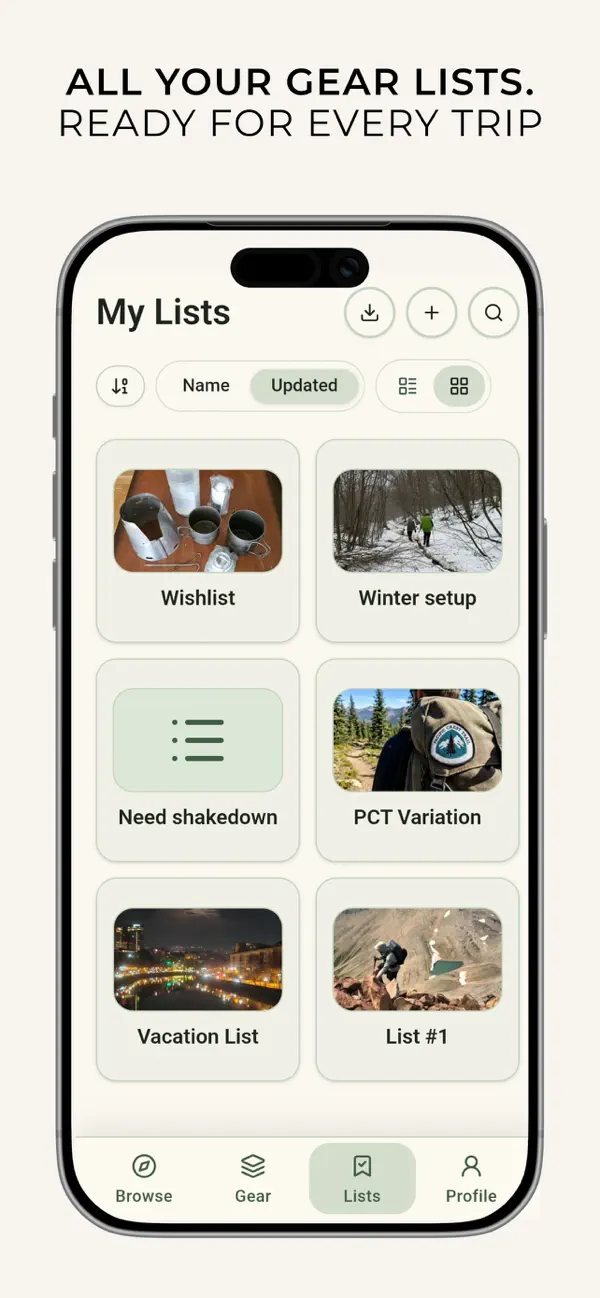
In MetaGear, start from gear already saved in Gear Locker and build a separate list for a winter route or condition set. Record exact item weights, keep alternative layers or traction available in the locker, and use Checklist Mode to verify the final selection. The list remains a planning record you can refine after the trip.
When the trip includes camping, combine this route card with the complete backpacking system checklist and the relevant land-manager guidance for the exact destination.