
Day-Hike Packing List: Essentials Plus a Route-Based Checklist
For a day hike, pack the Ten Essentials as functional systems—not ten brand-name products—then adjust each system for the route, current conditions, group, and consequences of delay. A two-mile urban trail and a full day above treeline should not produce identical quantities or backup plans.
The Day-Hike Essentials Checklist
The U.S. National Park Service describes the Ten Essentials as systems that can help with minor injuries, changing weather, or unexpected emergencies, and notes that activities and locations may require additional items. Use that framework as the core of the list.
| System | What to account for |
|---|---|
| Navigation | Route information available offline, plus an appropriate backup and the skills to use it |
| Light | Headlamp or flashlight with adequate power, even when you plan to return before dark |
| Sun protection | Sun-protective clothing and products appropriate to the conditions |
| First aid | Personal first-aid supplies, required medication, and blister care suited to the group |
| Repair and tools | A small route-appropriate repair kit and cutting or multitool function when useful |
| Fire | An emergency fire-starting option where legal, appropriate, and safe to use |
| Emergency shelter | A compact shelter option appropriate to exposure and conditions |
| Food | Food for the outing plus a reasonable delay buffer |
| Water | Capacity based on the route and weather, with treatment when relying on natural sources |
| Extra clothing | Insulation and weather protection for plausible changes and an unplanned stop |
Also include the ordinary items the framework does not name directly: suitable footwear, a daypack, identification, permits or passes, hygiene supplies, and any item required by the land manager. Pack out your waste and check the rules for the exact place you are visiting.
Adjust the List With Route Signals
Avoid fixed universal quantities. Water, insulation, navigation redundancy, and emergency equipment depend on current conditions and the route. Use these signals to decide which systems need more capacity or a stronger backup.
Familiar, short, close to help
Keep the core systems; right-size quantities without removing the ability to handle delay or weather.
Long, remote, or limited cell service
Increase navigation redundancy, emergency planning, food and water margin, and communication appropriate to the area.
Heat, exposed terrain, or long dry sections
Recalculate water capacity, sun protection, pace, and turnaround plan from current local guidance.
Cold, wet, windy, or fast-changing weather
Upgrade insulation, rain protection, dry storage, hand protection, and the ability to wait safely.
Snow, ice, scrambling, or technical terrain
Use route-specific equipment and skills; a general day-hike checklist is not sufficient.
Group hike, children, or pets
Assign shared gear explicitly and add each participant’s personal needs rather than assuming duplication.
Use a Three-Pass Packing Method
- Pass 1: route facts. Check the current forecast, alerts, access, daylight window, water situation, and local rules. Save the route information you need before losing reception and tell a trusted person the plan and expected return.
- Pass 2: system review. Walk through all ten systems and the route modifiers above. For a group, name who carries shared items; “someone has it” is not an assignment.
- Pass 3: physical check. Check each item only when it is in the pack or on the person. Test the light, confirm downloaded route data opens offline, inspect remaining power, and verify food and water amounts rather than the presence of their containers.
The trailhead check
- □ Conditions and alerts rechecked
- □ Route opens offline
- □ Light works
- □ Water amount verified
- □ Required medication carried
- □ Return plan shared
Keep a Reusable Day-Hike List in MetaGear
Save the items you actually own in MetaGear's Gear Locker, then build a core day-hike list. Clone it for meaningful variations such as hot exposed routes, wet shoulder-season hikes, or group outings. Notes can capture a storage location or a route-specific reminder, while weight analytics show when optional items have accumulated.
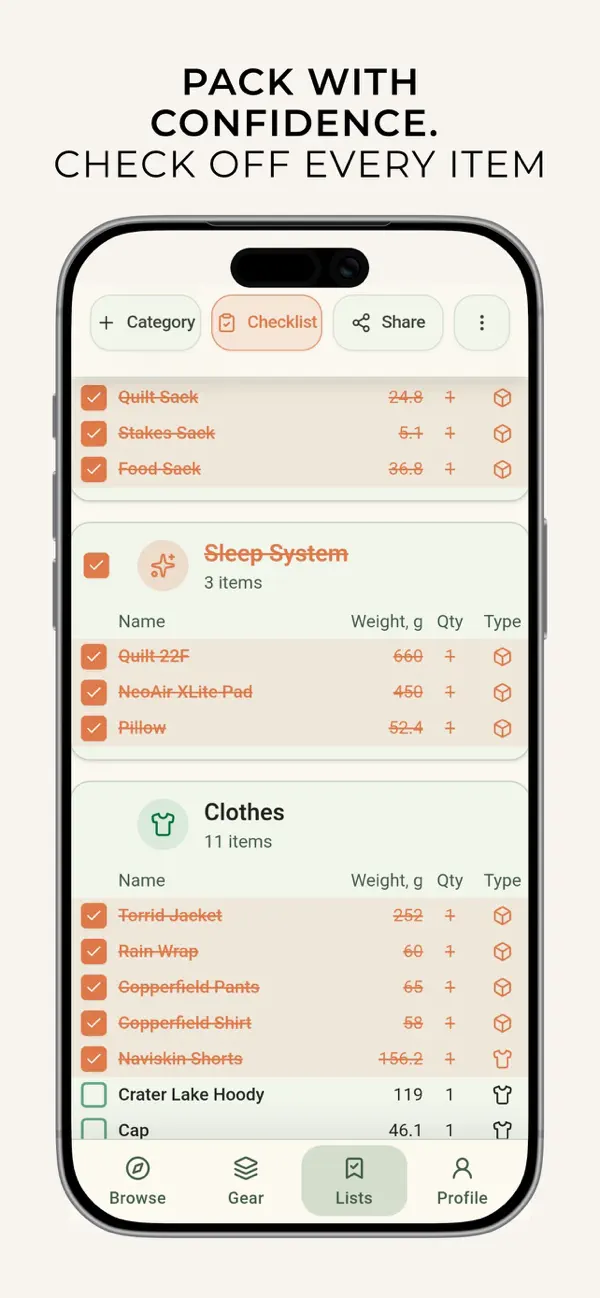
After the hike, add the forgotten item, remove unhelpful duplication, and restock anything used. If your collection is difficult to find at home, connect the list to the outdoor gear organization system.
Day Hike vs. Backpacking List
A day-hike list prepares for an unplanned delay without carrying a planned overnight camp. A backpacking list adds a complete shelter, sleep, cooking, and multi-day food system. When an overnight is part of the plan, switch to the full backpacking packing checklist rather than stretching the day-hike list beyond its purpose.