
Trail Running Gear Checklist: What to Carry for the Route, Weather, and Support Level
Trail running gear should expand with consequences, not just distance. A short remote run in unstable weather can need more planning than a longer supported race. Define the route envelope—time, remoteness, weather, water, terrain, and support—then choose a carry system and checklist that cover it.
The Direct Answer: Start With the Route Envelope
Record the expected duration, conservative duration, weather, daylight, water sources, navigation demands, exits, communications, and support level. Then pack each functional system: carry and hydration, navigation and communication, food and weather, and emergency and repair. Test the complete load while running before depending on it farther from an easy exit.
REI's printable trail-running checklist provides a broad reference across gear, clothing, food, and personal items. Your land manager, event organizer, forecast, and route-specific requirements determine the final kit.
Use Five Modifiers Instead of Mileage Alone
| Modifier | Question | What it changes |
|---|---|---|
| Duration and daylight | How long could the outing take at a conservative pace, including stops and a wrong turn? | Changes food, water, lighting, power, and clothing margin. |
| Remoteness and access | How quickly can the runner reach shelter, a road, aid station, or reliable help? | Changes navigation, communication, first aid, repair, and emergency protection. |
| Weather and exposure | What conditions are forecast, and how different can exposed or higher terrain be? | Changes layers, weather protection, sun protection, water, and turnaround rules. |
| Water and resupply | Which sources or aid points are confirmed, and what happens if one is unavailable? | Changes carried capacity, treatment method, food, and timing. |
| Event support | What does the organizer require, provide, prohibit, or inspect? | The official mandatory-equipment list overrides a generic checklist. |
Write a turnaround rule while the decision is easy. It might be a time, weather change, missed junction, unavailable water source, or equipment problem. The right rule is specific to the route and party; its purpose is to keep a planned outing from silently becoming a different one.
Trail Running Gear Checklist by System
Carry and hydration
- Running vest, belt, handheld, or pack sized for the actual load
- Water capacity and treatment required by the route
- Secure storage for phone, keys, and small essentials
Navigation and communication
- Route and map available without dependable service
- Navigation tool you know how to use
- Charged phone or route-appropriate communication device
Food and weather
- Food for the planned duration plus a route-based margin
- Layers and weather protection for forecast exposure
- Sun protection and required night lighting
Emergency and repair
- Compact first-aid supplies matched to the outing
- Emergency protection and signaling appropriate to remoteness
- Small repair items for the carry and footwear systems
Shoes, socks, clothing, and the loaded carry system should be tested together. A vest that feels stable when empty can bounce, rub, or block access after water, food, layers, and mandatory equipment are added. Fit the system to the real load, not the product's empty shape.
Treat Race Mandatory Gear as Its Own List
For an organized event, copy every required item from the current official race document into a dedicated list. Preserve the organizer's wording where size, specification, or quantity matters. Add personal items afterward, and check the document again close to race day in case instructions change.
Separate three sources of gear
- Required: named by the organizer and checked exactly against the event document.
- Route-based: added for the actual weather, remoteness, water, and navigation demands.
- Personal: tested food, clothing, care, and comfort items that make the plan workable for you.
Test Access, Not Just Presence
Load the vest or pack exactly as planned and verify that you can reach water, food, navigation, weather protection, and required items when tired or wearing gloves. Secure anything that can fall out. Confirm that a wet layer can be isolated and that frequently used items do not require unpacking emergency equipment.
After a short test run, update the list with what moved, rubbed, leaked, or remained inaccessible. That feedback is more useful than copying another runner's pocket layout because it reflects your equipment and movement.
Build Route and Race Variants in MetaGear
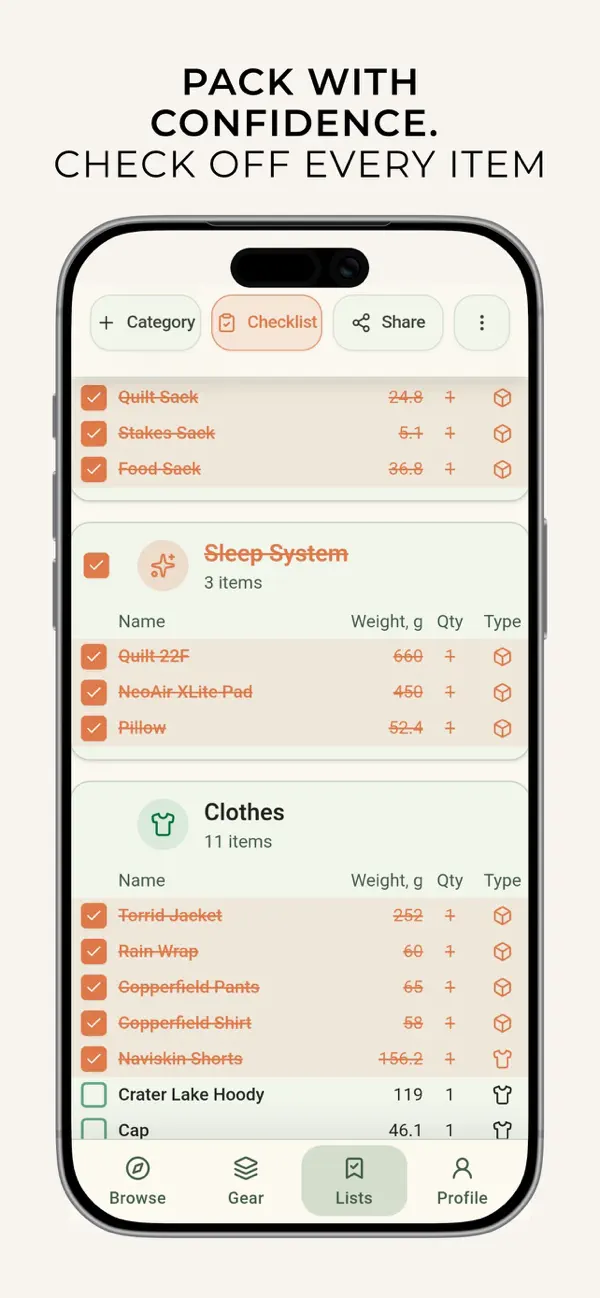
Save reusable trail-running equipment in Gear Locker, then create separate lists for a local loop, remote long run, night route, or race. Add item weights and quantities, keep mandatory gear visible, and turn the final list into Checklist Mode before departure.
For a lower-consequence outing, compare this process with the day-hike route modifiers. For an overnight run-hike objective, start with the complete backpacking systems and remove nothing until the route-specific consequence has been considered.