
How to Pack a Backpacking Backpack: Weight Distribution by Zone
Pack the bottom with bulky camp-only gear, place dense items in the core close to your back, use the top and pockets for trail access, and eliminate spaces that let the load shift. The result should feel centered and stable before you leave home—not merely fit inside the bag.
The Four Packing Zones
A backpack is easiest to load as four functional zones. REI's backpack-loading guide uses the same basic logic: bulky camp gear low, dense gear in the core, frequently used items near the top or outside. Treat that as a starting layout, then adapt it to your body, pack design, and route.
| Zone | Purpose | Typical contents | Final check |
|---|---|---|---|
| Bottom | Bulky, compressible gear you usually need only after reaching camp | Sleeping bag or quilt, sleep clothing, soft camp layers | Nothing hard should press through the pack into your lower back. |
| Core | Dense, heavy items held close to the middle of your back | Food bag, cook kit, tent body, dense shared equipment | The load should not pull backward or lean to one side. |
| Top | Lighter items and equipment needed during stops | Insulation, first aid, water treatment, headlamp | Keep the top compact so it does not make the pack top-heavy. |
| Pockets and exterior | Frequent-access items and wet gear separated from dry equipment | Water, snacks, map, rain shell, tent stakes, wet filter | Nothing should swing, snag, fall out, or block access to safety gear. |
Pack the Bag in Seven Passes
- 1. Lay out the complete list. Organize equipment by sleep, shelter, kitchen, water, clothing, safety, and trail access. Remove duplicates before packing; better arrangement cannot rescue an unnecessarily heavy load.
- 2. Prepare water protection. Install the pack liner or dry-storage system first. If you use a hydration reservoir, place it in its sleeve before the bag becomes full and confirm the hose route does not kink.
- 3. Build a soft bottom. Load the protected sleeping bag or quilt and other soft camp-only items. Compress them enough to create a base without turning every soft item into a hard ball.
- 4. Center the dense core. Place food, the cook kit, or other dense equipment close to the back panel. Fill around them with shelter fabric or clothing so the core cannot move sideways or away from your body.
- 5. Separate wet and dry systems. Keep the sleep system dry and isolate wet shelter fabric, a damp filter, rainwear, or fuel. Store fuel according to its manufacturer instructions and away from anything that could be contaminated.
- 6. Reserve the access layer. Put likely stop items near the top or in dependable pockets. Do not bury the rain shell, water treatment, headlamp, or first-aid kit under gear you will not use until camp.
- 7. Compress and test. Close the pack, tighten its compression system evenly, and check every external attachment. Nothing should sway when you turn, squat, or step over an obstacle.
Keep These Items Reachable
Accessibility is part of weight distribution. Opening the whole pack for every snack or weather change wastes time and encourages loose, hurried repacking. Reserve dependable locations for the items you may need while moving.
- Water and the treatment method needed for the next source
- Food for the walking day, not the entire food bag
- Rain shell, insulation, gloves, or sun protection as conditions require
- Navigation and communication equipment
- First-aid, blister-care, and required medication
- Headlamp, toilet kit, and a small repair kit
External storage is not free capacity. Bottles must stay retrievable and secure, poles and tent components must not catch on brush, and wet items must not drip into dry gear. Avoid hanging heavy objects from the back of the pack, where they can swing and pull the load away from you.
Test the Load Before the Trailhead
Put the pack on with the food and water you expect at the heaviest point of the trip. Adjust it using the manufacturer's fitting order, then walk stairs, turn quickly, and bend to pick something up. A stable load should move with you rather than arriving a moment later.
Diagnose the feeling, not just the number
- Pulling backward: move dense gear closer to the back and remove rear-heavy exterior storage.
- Leaning sideways: rebalance water, food, and dense equipment.
- Hard pressure point: pad or reposition the object causing it.
- Constant shoulder strain: check pack fit, hipbelt position, and total weight rather than only tightening straps.
- Swaying: fill gaps and use compression to stop internal movement.
Turn the Layout Into a Repeatable Pack List
Record the equipment before it disappears into the bag. MetaGear separates base, worn, and consumable weight and shows the category distribution, making a dense or oversized system visible before packing day. Add a short location note—such as “core by back panel” or “left hipbelt”—for items whose position matters.
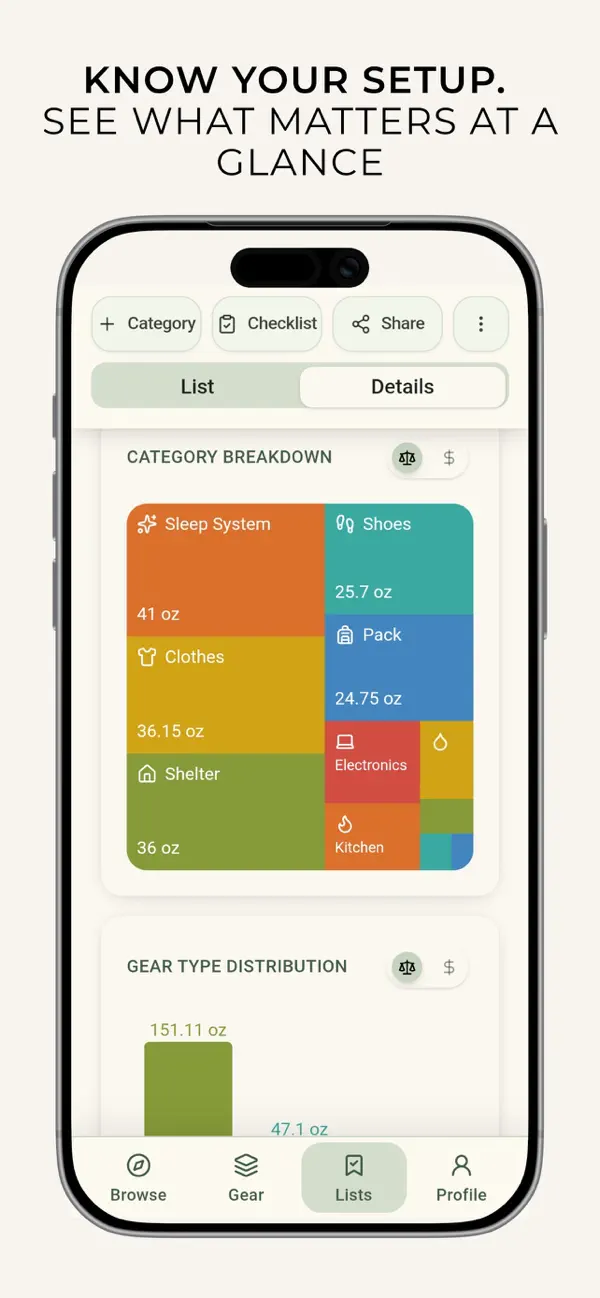
Begin with the complete backpacking checklist, then use the gear-weighing method so the loaded test reflects what you will actually carry. If the arrangement still feels poor, reduce or replace equipment with the base-weight review instead of forcing an unsuitable load into a smaller space.
Frequently Asked Questions
Where should the heaviest items go in a backpacking backpack?
Put dense, heavy items in the pack core, close to your back and roughly around the middle of the torso. Keep them centered left to right and immobilized with softer gear. The exact position can change with pack design and terrain, so test the loaded pack rather than relying on a diagram alone.
Should a sleeping bag go at the bottom of a backpack?
Usually, yes. A sleeping bag or quilt is bulky, compressible, and normally not needed until camp, which makes the bottom zone a practical place for it. Protect it from moisture with a reliable liner or dry storage appropriate to the trip.
Where should a tent go in a backpack?
A tent can be split so the body or fly fills space inside the pack while poles and stakes sit securely along a side or in a dedicated external position. Keep wet fabric away from the dry sleep system, and avoid any external placement that swings or catches on the trail.
How do I stop a backpack from pulling me backward?
Move dense items closer to your back, remove empty spaces that let the load shift, balance the left and right sides, and tighten the pack compression system. If the pack still pulls backward, check its fit and total load rather than trying to solve everything with tighter shoulder straps.
Should I pack everything in separate stuff sacks?
Use separate bags when they solve a real problem such as waterproofing, food storage, hygiene, or fast identification. Too many round, rigid bundles can waste space and create an unstable load. Soft items often pack more efficiently when they fill gaps around dense gear.