
How Much Food to Bring Backpacking: Calories, Weight, and a Daily Plan
Choose a daily calorie target from your normal intake and the trip's effort, convert it to food weight using the menu's actual calorie density, multiply by trail days, then add a route-appropriate delay margin. Test the menu before the trip: enough calories on paper do not help if the food is hard to prepare or you will not eat it.
Start With Energy, Then Calculate Weight
REI's backpacking meal-planning guide gives a broad starting range of about 2,500 to 4,500 calories per person per day. That range is intentionally wide. A short, relaxed overnight and a long day with major climbing do not create the same demand, and appetite can change over a longer trip.
Begin with what you normally eat during an active day. Adjust for expected hours of movement, climbing, pack load, temperature, altitude, trip duration, and prior experience. For special dietary or medical needs, use professional guidance rather than a generic trail formula.
Use the Calorie-Density Formula
Daily food weight
daily calories ÷ average calories per unit of weight
Example: 3,200 calories divided by 125 calories per ounce equals 25.6 ounces, or about 726 grams, of food per day. Multiply the daily result by the number of trail days, then add the chosen reserve.
| Average menu density | Daily energy | Approximate food weight |
|---|---|---|
| 100 kcal/oz (3.5 kcal/g) | 3,000 kcal | 30 oz (850 g) |
| 125 kcal/oz (4.4 kcal/g) | 3,000 kcal | 24 oz (680 g) |
| 150 kcal/oz (5.3 kcal/g) | 3,000 kcal | 20 oz (570 g) |
| 125 kcal/oz (4.4 kcal/g) | 4,000 kcal | 32 oz (910 g) |
Calculate density from the packaged weight of the food you carry, not the prepared weight after adding water. Include drink powders, condiments, and packaging when they materially affect the bag. Do not optimize density so aggressively that the menu loses variety, fiber, protein, micronutrients, digestibility, or appeal.
Build One Complete Trail Day
Design a representative day before multiplying it across the trip. Divide the target among breakfast, food eaten while moving, an arrival snack, dinner, and drinks or desserts. Put more of the day's food into forms you already eat comfortably during exercise.
- Record the calories and carried weight of every item in the day.
- Check that no single meal depends on more water, time, or fuel than the route allows.
- Include salty and sweet options, different textures, and at least one simple food you reliably tolerate.
- Separate walking food from the main bag so it remains reachable.
- Test the full day on a training hike instead of sampling one dinner at home.
Check the Whole Food System
Will I eat it?
A mathematically efficient food that becomes unappealing on day three is unused weight.
Does it match the water plan?
Dry food may save carried food weight but can increase cooking or rehydration water needs.
Does it match the stove and fuel?
Long cooking times, cold conditions, and extra hot drinks change fuel requirements.
Can I eat during the day?
Accessible snacks reduce the chance that all calories remain buried until camp.
Is storage legal and adequate?
Bear canisters, hangs, lockers, and other rules can constrain volume and packaging.
Packaging and storage are part of the plan. Check current rules for bear-resistant containers or food storage, confirm the complete food volume fits, and remove unnecessary retail packaging at home without losing preparation instructions or required labels.
Add a Delay Margin You Can Actually Use
The National Park Service's Hike Smart guidance recommends bringing an extra day's food. Adapt the margin to the route, remoteness, weather, resupply certainty, group, and consequences of delay. Reserve food should remain edible if the stove fails or the schedule changes.
Keep the reserve explicit rather than scattering “a little extra” through every meal. That makes its calories and weight visible and prevents casual eating from silently consuming the delay margin on the first day.
Track Food as a Consumable in MetaGear
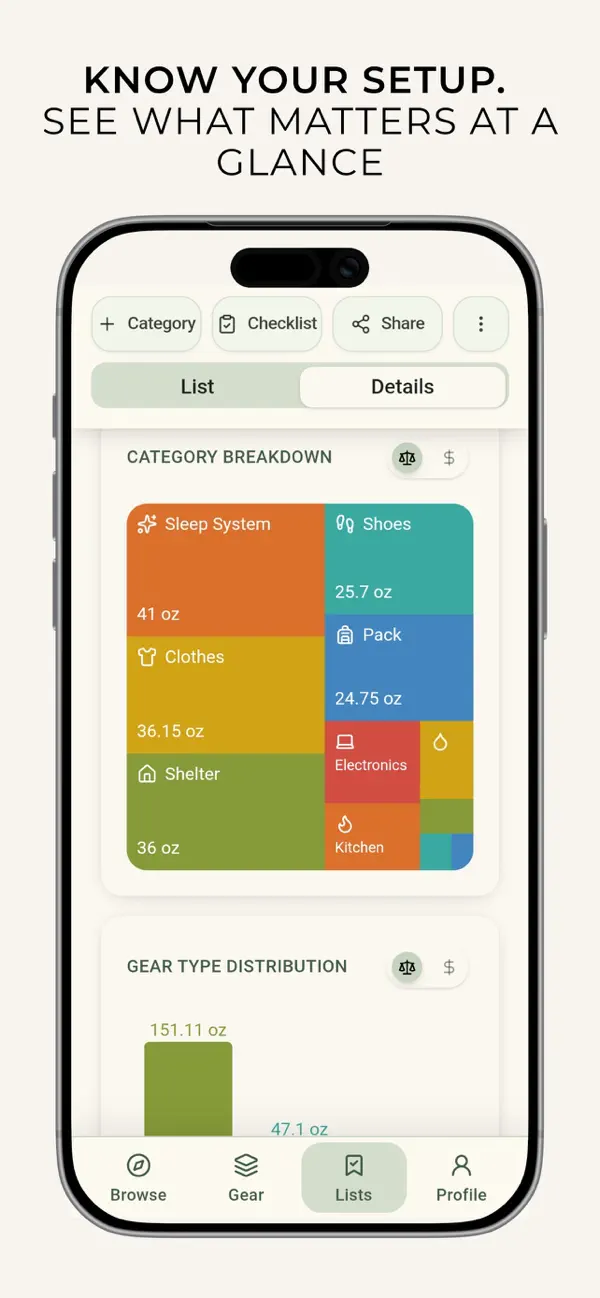
Create a food category, add the number of daily rations, and mark them consumable. MetaGear excludes consumables from base weight but includes them in total trailhead weight, so a low base-weight figure cannot hide a large first-day food carry.
Pair the food calculation with the route-based water plan and the complete backpacking checklist. After the trip, record leftovers and shortages by meal. That feedback is more valuable than another generic meal list.
Frequently Asked Questions
How many calories per day do I need for backpacking?
There is no universal number. A broad planning range often cited for backpacking is about 2,500 to 4,500 calories per person per day, but body size, trip difficulty, pace, temperature, altitude, duration, and appetite can move the requirement. Start from your normal intake and test the plan on similar trips.
How much should backpacking food weigh per day?
Daily food weight follows from calories divided by average calorie density. At 3,000 calories and 125 calories per ounce, the food weighs about 24 ounces or 680 grams per day. Lower-density menus weigh more; higher-density menus can be lighter but still need to be nutritious and appealing.
What is a good calorie density for backpacking food?
Around 125 calories per ounce, or 4.4 calories per gram, is a useful whole-menu planning target rather than a rule for every item. Some foods are higher and others lower. Judge the complete day for energy, nutrition, preparation, taste, and digestibility—not density alone.
Should I bring an extra day of food backpacking?
The National Park Service recommends an extra day’s food as part of general hiking preparation. Apply the margin to the route and consequences of delay, and choose reserve food that is compact, requires little preparation, and remains usable if the stove or schedule changes.
Does food count toward base weight?
No. Food is consumable weight, so it is excluded from base weight. It still counts toward total trailhead weight and can be one of the heaviest categories at the start of a long carry. Track both numbers so base-weight goals do not hide the load on your back.