
Hiking Trip Plan Template: What to Leave With a Trusted Contact
Before leaving, give a reliable person the party details, exact route, start and return schedule, overdue time, vehicle, communications, equipment, backup plan, and instructions for contacting the appropriate local authority. A map link helps, but it is only one part of a useful plan.
The Copyable Hiking Trip Plan
The U.S. National Park Service defines a trip plan as written information that can help search-and-rescue authorities locate a visitor who does not return as expected. Its guidance is to leave the plan with a trusted contact who is not on the trip—not to assume a park office will hold it.
| Plan section | Information to record |
|---|---|
| Hiker and party | Names, mobile numbers, relevant medical or mobility information voluntarily shared, and a recent description or photo. |
| Route | Trailhead, destination, planned route, direction, camps, waypoints, alternates, and attached map or GPX reference. |
| Schedule | Departure, expected progress points, planned finish, expected contact time, and the explicit time at which you are overdue. |
| Vehicle and transport | Vehicle make, model, color, registration, parking location, shuttle, public transport, or pickup arrangements. |
| Equipment and communications | Shelter and visible gear, phone, satellite communicator or beacon, device identifiers where relevant, and expected communication limits. |
| Conditions and backup plan | Forecast, known hazards, turnaround rules, alternate route, evacuation options, and what changes are plausible. |
| Trusted-contact actions | How to try the party, when to contact authorities, which local agency covers the area, and the complete plan to share. |
Copy those headings into a document, email, or note. Use precise place names and attach the route rather than writing “hiking near the mountain.” For a multi-day trip, list each planned camp or daily section and the alternates you might realistically use.
Separate Expected Return From Overdue Time
“Back Sunday evening” forces the trusted contact to make the hardest decision without enough information. Write at least three distinct moments:
- Expected finish: when you reasonably plan to reach the trailhead or destination.
- Expected contact: when you will send the explicit “safely out” message, allowing for travel to reception where necessary.
- Overdue time: when the trusted contact should follow the written escalation instructions if contact attempts fail.
Include the full date, time, and time zone. Agree on what the contact should do first and which authority covers the route. Do not make them search for the correct agency while wondering whether a delay is normal.
Make Route Changes Part of the Plan
A useful plan acknowledges plausible changes without becoming vague. Name the alternate trailhead, bailout route, weather turnaround, or second campsite you may use. State whether choosing one requires an update and how you will send it.
Example change rule
“If the ridge is unsafe, we will return by the approach trail to the original vehicle. If we choose the east-valley exit instead, we will send an update before leaving reception. No update means the original route and return plan remain active.”
When a change occurs after communications are lost, use conservative judgment. The contact and any responding team can act only on the information you left. Avoid unnecessary deviations that make the plan misleading.
Explain the Equipment and Communications
List the communication methods you actually carry and their limits: mobile phone, satellite messenger, personal locator beacon, radio, or none. Record account or device information only when it is relevant and safe to share. Do not promise live tracking if the route, plan, or device does not provide it.
Describe recognizable equipment such as pack and shelter colors, relevant vehicle details, and the group's ability to wait safely. Attach a recent photo if appropriate. Keep personal information in the private plan rather than displaying it publicly at a trailhead.
Give the Trusted Contact a Clear Protocol
The trusted contact should know they have the role, not discover it after you are late. Review the plan together and make sure they can open every attachment. The NPS guidance instructs the contact to try the visitor and, if there is no response, contact authorities and share the trip-plan information.
- The trusted contact has agreed to the role and will be available.
- The route file or map opens without access to your account.
- The expected-return time and overdue time are written with date and time zone.
- The contact knows which changes are pre-approved and which require an update.
- Local authority and land-manager contact details are current for this trip.
- You will send a clear completion message when safely out.
Share Route and Gear Context With MetaGear
A MetaGear outdoor profile can present route, gear-list, photo, note, and link widgets on one browser-accessible page. That can give a trusted contact useful route and equipment context without requiring the app. Send the complete private protocol separately when it contains sensitive details.
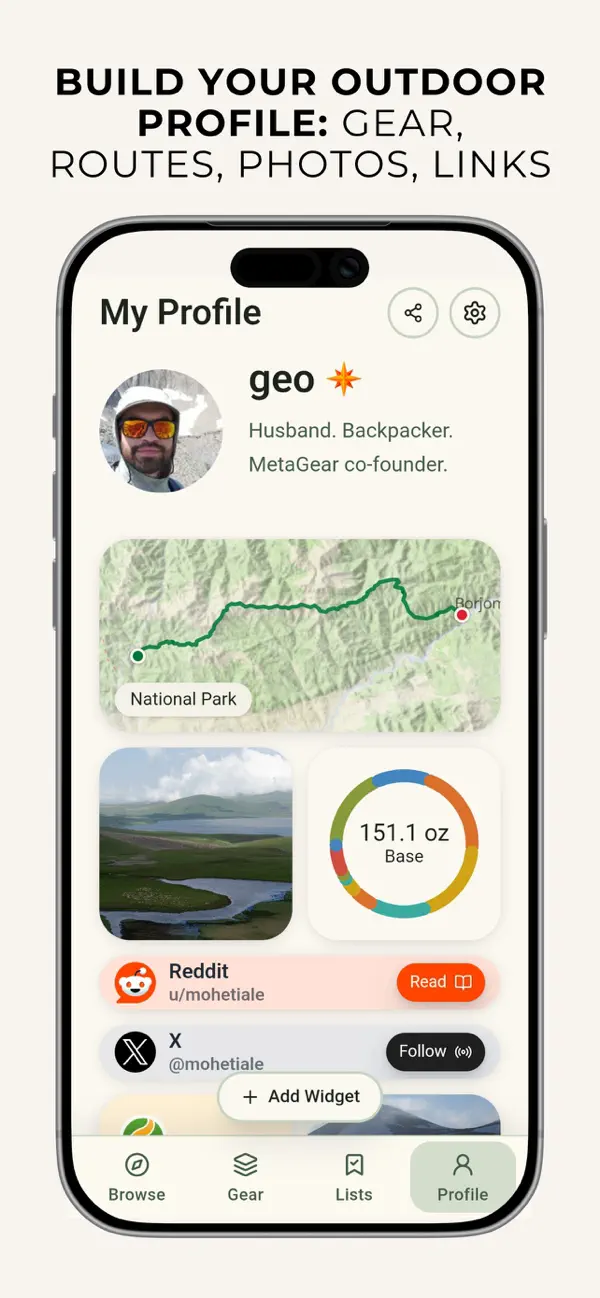
MetaGear is not an emergency alert or rescue service, and a profile does not replace a dedicated SOS device, emergency training, official registration, or permits. Use the gear-list sharing guide for the equipment portion and the route-based essentials checklist for the physical systems carried on the trip.
Frequently Asked Questions
What should a hiking trip plan include?
Include who is going, the exact route and alternates, departure and expected return, an explicit overdue time, vehicle or transport details, equipment and communications, relevant conditions, and clear instructions for the trusted contact. Attach a map or route file that opens without your account.
Who should I leave my hiking plan with?
Choose a reliable person who is not on the trip, has agreed to monitor the return plan, will be reachable, understands when you become overdue, and is willing to contact the appropriate local authority and share the complete information.
When should an emergency contact report a hiker overdue?
Agree on a specific overdue time before departure instead of leaving the contact to guess. The plan should say how to attempt contact and which local authority to notify if those attempts fail. Set the time from the route, expected delays, and local guidance.
Is a shared route link enough for hiking safety?
No. A route link does not identify the party, vehicle, schedule, equipment, communication method, backup plan, or overdue protocol. It is one attachment inside a complete trip plan, and it does not replace emergency equipment, training, permits, or a dedicated SOS device where appropriate.
Should I leave my hiking itinerary on the car dashboard?
Avoid displaying sensitive personal and absence information publicly unless the land manager specifically instructs you to use a registration system. Leave the detailed plan directly with a trusted contact and follow the exact registration or permit process for the area.